The 100-Gram THERMOLITE Rating, PU Leather, and Luxury Curtain Fabric: What Spec Sheets Don't Tell You
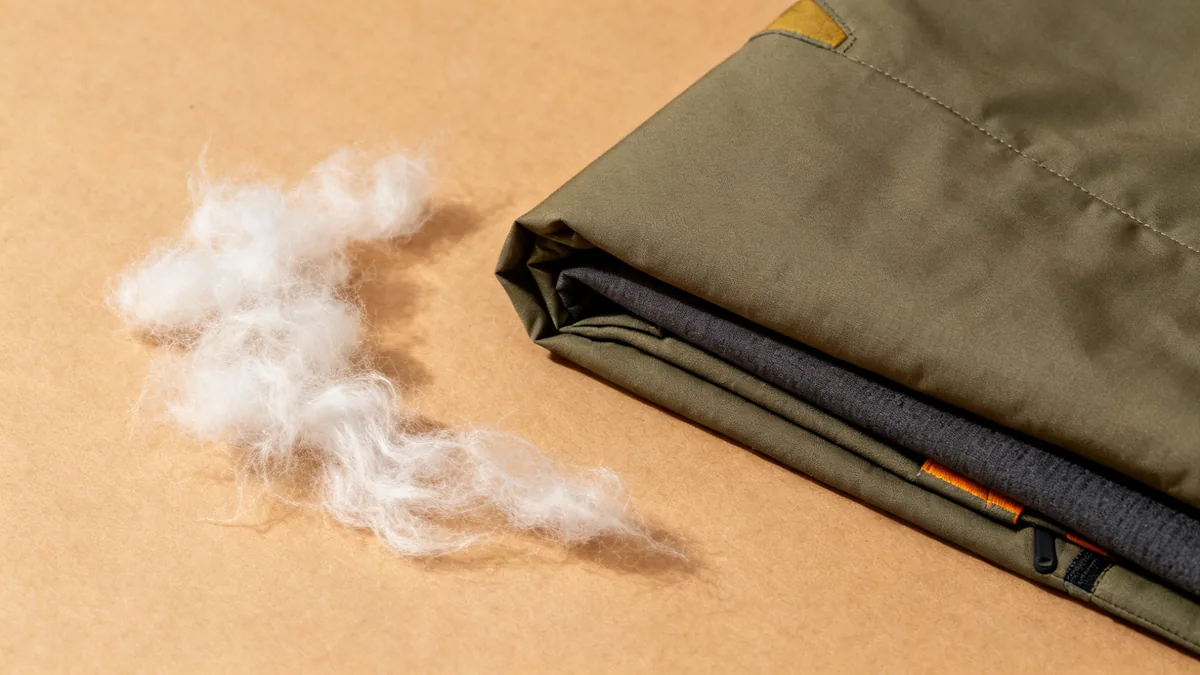
A 100-gram THERMOLITE insulation rating gets most active adults through 40°F–50°F (4°C–10°C) weather under a shell—it is not a guarantee of warmth below that, and the "100" on the label is a density figure, not a temperature figure. Read the number as a starting point for comparing specs, not as a forecast. If a supplier sells it to you as an unconditional cold-weather solution, that's the first red flag in your inbox.
My angle here is specific. I work as a quality and brand compliance reviewer for a fabric company that supplies outdoor and lifestyle brands. I review around 180 material specifications a year and reject somewhere north of 15% of first deliveries—16% last year if I remember correctly, though that figure counts only the samples that came through my desk, not the company's total rejection rate. Most of those rejections come down to the same thing: the numbers on the spec sheet and the numbers on the test bench disagree. The 100 gram THERMOLITE insulation temperature rating question is a clean example of a number that looks precise and isn't.
Read the rest of this expecting to be a little annoyed with how material specifications are written. Spec inflation is common—not always dishonest, because design teams write specs with good intent and then marketing edits the language—but the customer ends up holding a jacket, a roll of PU leather, or a swatch of "luxury curtain fabric" that underperforms the label.
What "100 gram" actually measures (and what it doesn't)
When someone asks me what the 100 gram THERMOLITE insulation temperature rating really means, this is the answer I give: the number is the weight of the insulation layer in grams per square meter (GSM). It measures density. It does not measure thermal resistance, and it does not measure the actual garment warmth on a body.
Two 100g THERMOLITE fabric samples can differ by 15–20% in thermal resistance depending on fiber denier, loft, bonding method, and how the outer shell compresses them. That's not a defect—that's the nature of the category. If a supplier provides a thermal resistance number, ask which standard produced it. ASTM D1518 and ISO 11092 don't yield identical results for the same fabric, and most spec sheets quietly omit which one was used. That omission tells you something.
The 40°F–50°F range you'll see quoted for 100g in active use comes from combining lab thermal resistance with body-activity assumptions. Change the activity level, the layering system, or the wind exposure, and the "rating" moves. Which is why the single most useful question you can ask a supplier isn't "what's the temperature rating"—it's "under what test conditions, and at what activity level?"
Here's a real case. In early 2023, we received a 6,000-unit insulation delivery that measured 92 GSM against a 100 GSM spec. The vendor called it "within industry tolerance." Maybe in their catalog it was. Against ours, it wasn't—the retail customer's lab would have measured it too, and retail labs don't accept vendor tolerance as a defense. We rejected the batch. They redid it. Now every contract specifies incoming GSM checks plus a wash-and-measure step for loft retention.
I knew I should have run that wash cycle test on a shipment back in spring 2022 even though the vendor had a certificate on file. I thought, what are the odds of a bad batch when they ship 200,000 units a year to brands bigger than us? The odds caught up with us—about 12% loft loss after three washes, and we only noticed because a customer sent a photo. Looking back, I should have made the wash test standard as soon as we started buying at that volume. At the time, their certificate looked airtight.
What "PU leather" means—and why the naming matters more than the spec
Answering this directly, because it comes up in every material audit: PU leather is a polyurethane coating applied over a fabric backing—usually knit or woven polyester. It's not leather, and it doesn't pretend to be. It's a distinct material with its own performance profile: consistent, water-resistant, easy to wipe down, and about 10–15% of the cost of full-grain leather at commercial scale—don't quote me on the exact multiple, that ratio moves with the base fabric.
Where quality review actually has teeth is the naming. Under the FTC's Leather Guides (16 CFR Part 24), labeling a polyurethane-coated material as "leather" without a qualifier is deceptive. A supplier whose spec sheet says "PU leather" or "polyurethane-coated fabric" is being straight with you. A marketplace listing that says "leather" on a $9 bag, with review photos showing a peeling corner, is the same spec problem at a different price point—and a much more expensive mistake for whoever buys at scale to relabel.
What to actually measure on PU leather: coating adhesion (peel strength), flex resistance at the fold line, thickness consistency, color fastness, and tear strength of the backing. Those five tests tell you within a shift whether a shipment is sellable. "Feels premium" tells you nothing—I've had swatches that felt great in the hand and cracked along the fold on cycle 40.
Where "luxury curtain fabric" collapses under scrutiny
We also specify luxury curtain fabric for our showroom and retail display installations, which means I end up running the same battery of tests on blackout and decorative curtains that I run on outerwear. Different category, same failure modes.
"Luxury" is a marketing word. It's not a specification. What the lab actually cares about:
- GSM (fabric weight). Entry-level "luxury" curtains usually run 180–220 GSM. Serious blackout products run 250–320 GSM. Above 320, weight stops being the deciding factor and drape handling takes over.
- Blackout rating. Measured in lumens or on a 1–5 scale depending on standard. A "99% blackout" claim without a lab report behind it is marketing—treat it that way.
- Flame resistance. NFPA 701 in the U.S., BS 5867 in the U.K., and other regional standards. Commercial installations, hotels, and theatrical use are held to these. Residential retail often isn't—but the spec sheet should say which regime applies.
- Color fastness to light. ISO 105-B02 rates 1–8. Anything under a 5 on luxury curtain fabric is a consumer complaint waiting for the first summer sun. More often than not, fading complaints cluster in the same window-facing rooms.
- Batch-to-batch color consistency. Without a ΔE tolerance on the spec sheet, batches of "luxury" curtain fabric will disagree wall to wall.
Years into this job, "luxury" on a spec sheet reads the same as "premium" on a phone screen: a word that costs nothing to print and usually assumes you didn't measure.
What I actually put in a spec—and what I leave out
The specs I insist on aren't the impressive-sounding ones. They're the ones a lab can falsify:
- Insulation materials: GSM within ±5%, wash-cycle loft retention ≥85% after three washes, thermal resistance measured per ASTM D1518 with test conditions attached.
- PU leather: coating adhesion ≥4N/25mm, flex ≥100k cycles at stated test conditions, tear strength at or above the spec sheet baseline.
- Luxury curtain fabric: GSM ≥250, NFPA 701 pass (or local equivalent), ISO 105-B02 ≥5, ΔE ≤1.5 batch to batch.
Notice what's missing: "warmest," "most luxurious," and "genuine leather" on a PU product. None of those are falsifiable in a lab, and none of them help you send back a bad shipment. If a spec sheet only tells you the weight and the price, you're not reading a spec—you're reading the first half of a sales pitch.
When a spec sheet is enough—and when it isn't
For simple, low-consequence materials—basic cotton canvas, plain polyester shell, commodity lining—the spec sheet plus a spot check on delivery is usually enough. Over-specifying here wastes money and lead time, and I've been as guilty of that as anyone.
Specs matter most in three situations:
- The product carries your brand name on the neck label. Their failure becomes your warranty call.
- The material serves a safety or durability function—insulation on winter product, flame resistance on commercial curtains, coating adhesion on anything sold as leather-like.
- Batches ship from multiple factories under one SKU. This is where PU leather, thermal insulations, and decorative fabrics all drift.
Two boundaries worth naming. First, this was accurate as of Q1 2025—test standards get revised, and FTC guidance on material claims shifts, so verify current regulations before you finalize a contract. Second, I'm speaking as a buyer and specifier, not as an accredited lab. If a supplier has a current ISO 17025 certificate and a long unremarkable history with you, dropping from full testing to a periodic spot check can be a reasonable call. The over-confidence failure I mentioned above—that was me choosing no test at all instead of a spot check. Different decision, different risk.
If I had to sum this up for the version of me from five years ago: read the spec, then ask what it doesn't say. That second part is almost always where the money is.
Permalink: /blog/the-100gram-thermolite-rating-pu-leather-and-luxury-curtain-fabric-what-spec-1.html

Jane Smith
I’m Jane Smith, a senior content writer with over 15 years of experience in the packaging and printing industry. I specialize in writing about the latest trends, technologies, and best practices in packaging design, sustainability, and printing techniques. My goal is to help businesses understand complex printing processes and design solutions that enhance both product packaging and brand visibility.