Fabric Selection by Scenario: THERMOLITE, Lyocell, and Viscose for Buyers Who Can't Afford a Rework
-
There's No One "Best" Fabric—Only the Right Fabric for Your Scenario
-
Scenario A: You Need Warmth in a Lightweight Package
-
Scenario B: You Need Softness, Breathability, and Moisture Management
-
Scenario C: You Need Drape and Cost Control
-
Scenario D: You're Already in an Emergency
-
How to Tell Which Scenario You're In
There's No One "Best" Fabric—Only the Right Fabric for Your Scenario
Ask five suppliers which fabric is right for a new product and you'll get five confident answers. That confidence is exactly what makes fabric selection hard. Every material is the correct choice in some scenario and the wrong one in another.
I coordinate emergency fabric sourcing. Over the past several years, our team has handled more than 200 rush material orders—insulation shortfalls two days before a cut-and-sew deadline, last-minute fiber substitutions after a returned lab dip, lyocell and viscose mixes that didn't behave the way the spec sheet promised. A fair share of those emergencies started as a spec that looked fine until it met the production floor. So this isn't a "best fabric" list. It's a scenario guide.
Three use cases come up again and again. Figure out which one you're in and the choice gets a lot easier (it usually does, once the scenario is named out loud).
Scenario A: You Need Warmth in a Lightweight Package
If the product is cold-weather activewear, a liner, or a packable layer, you're probably looking at polyester insulation—and THERMOLITE is one of the names that shows up on most buyer shortlists.
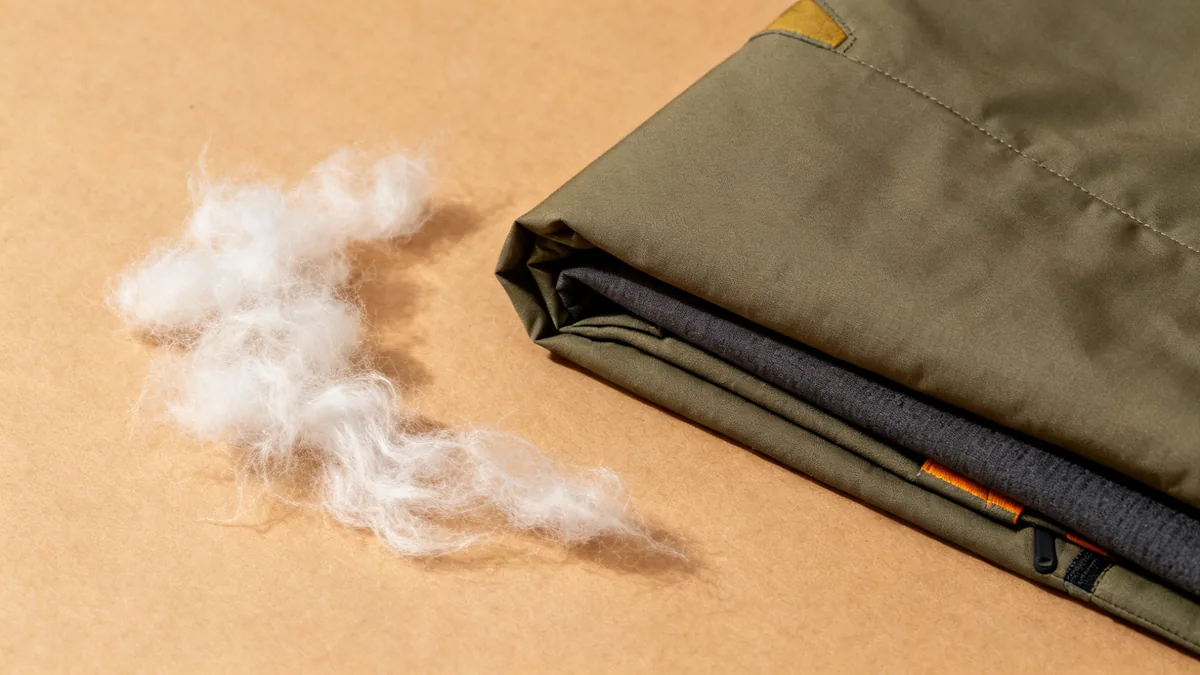
Thermolite fabric is built around polyester insulation designed to trap warmth without much bulk. In practice, that means it's a decent fit for garments where weight and packability matter more than raw loft. The question I get most often is about the 100 gram THERMOLITE insulation temperature rating. Here's the honest answer: there's no universal temperature number stamped on the spec sheet. A 100 g/m² rating is a weight, not a thermometer. What it actually delivers depends on the shell fabric, the lining, garment construction, whether the wearer is moving or standing still, and what they're layering underneath. A 100g panel in a windproof shell behaves very differently from the same panel in an open knit.
What I tell buyers: treat the gram weight as a starting reference, then test a prototype in the conditions you actually care about. Suppliers will sometimes quote a "rated to X°F" figure—ask what test method and what layering assumption that number is based on. (Note to self: add that question to the standard RFQ checklist.)
From the outside, a higher gram weight looks like "more warmth." The reality is that construction and shell choice often matter as much as the fill weight itself.
Where THERMOLITE tends to earn its place is in products that need warmth without weight—think a midlayer, a sleeping-bag liner, or a pair of insulated pants that needs to pack down. Where I'd look elsewhere: garments that have to stand up to serious abrasion or repeated high-heat laundering, because no insulation likes being asked to do a shell's job.
Scenario B: You Need Softness, Breathability, and Moisture Management
If the product sits next to skin—base layers, lightweight tops, warm-weather activewear—the calculus changes. This is where lyocell fabric usually enters the conversation.
Lyocell is a cellulose fiber, produced through a solvent-spinning process that recovers a high percentage of the solvent. The lyocell fabric characteristics that matter most to buyers: it drapes softly, it breathes, it manages moisture reasonably well, and it tends to feel smoother against skin than a lot of alternatives. It also takes dye cleanly, which is why it shows up in premium basics.
The trade-off is cost and care. Lyocell is typically pricier than conventional viscose, and it can be somewhat more sensitive to harsh washing. If your product is a budget basic that will get thrown in a hot wash, lyocell might be overkill. If it's a next-to-skin layer where hand-feel is part of the selling proposition, it's often worth the premium. I'm fairly skeptical of suppliers who claim one fiber solves every comfort problem; lyocell is good, but it doesn't make a badly constructed garment feel nice.
Scenario C: You Need Drape and Cost Control
What is viscose fabric? It's another cellulose-based fiber—often called rayon in some markets—made by dissolving wood pulp and regenerating it into fiber. It drapes beautifully, takes color well, and is generally cheaper than lyocell.
The catch: viscose has lower wet strength than lyocell, and it can shrink or distort if it isn't handled carefully in finishing and laundering. For a fluid fashion top or a lining where drape matters and cost is tight, it works well. For anything that needs to survive heavy washing or a lot of abrasion, think twice.
Here's a quick way to keep them straight: lyocell is the performance-leaning cellulose fiber (softer hand-feel, better wet strength, higher price); viscose is the drape-and-cost cellulose fiber. Both breathe. Both are plant-derived. Neither is a substitute for the other without testing (note to self: this is the line I keep having to repeat to clients who want to swap without a wash test).
Scenario D: You're Already in an Emergency
This is the scenario I know best, and it's the one I'd rather help you avoid.
There's something satisfying about pulling off a rush order—finding a mill with capacity, getting a lab dip approved in 12 hours, watching the shipment land a day early. But the satisfaction fades fast when you realize the same order could have been a normal order if the spec had been checked a week earlier.
Our team lost a five-figure contract a few years back because we tried to save a little on a standard fiber spec instead of paying for the right one up front. The substitution failed dimensional stability testing at the client's factory, and we ended up air-freighting a replacement at roughly four times the original freight cost. That's when we put a rule in place: no fiber substitution on a production order without a wash-and-shrink test first. Five extra days on the front end, versus a rework cycle that can eat weeks.
The lesson applies directly to fabric selection. The 12-point spec sheet I built after that mess—fiber content, weight tolerance, shrinkage, colorfastness under the client's wash conditions, hand-feel reference—has probably saved us more than it cost to create. It's not glamorous. It's just cheaper than the alternative.
How to Tell Which Scenario You're In
If you're still not sure where your product lands, run through these questions in order:
- Is warmth the core function? If yes, start with polyester insulation like THERMOLITE and treat the 100-gram spec as a reference point, not a guarantee.
- Does it touch skin and need to breathe? Lean toward lyocell—especially if the product is positioned as premium or performance.
- Is drape the priority and cost is tight? Viscose earns its keep here, provided you can control finishing and laundering.
- Is the order urgent because of a spec change or a missed check? Stop and fix the spec first. Rush fees don't fix a wrong material.
None of these are universal answers. They're starting points. The one thing I'd push any buyer on: confirm the spec before you confirm the quantity. In my experience, most of the emergencies we handle were preventable with one more round of verification—a wash test, a hand-feel sample, a real conversation about how the garment will actually be used.
That's not a marketing line. It's just what the rush orders keep teaching us.
Permalink: /blog/fabric-selection-by-scenario-thermolite-lyocell-and-viscose-for-buyers-who-can039t-2.html

Jane Smith
I’m Jane Smith, a senior content writer with over 15 years of experience in the packaging and printing industry. I specialize in writing about the latest trends, technologies, and best practices in packaging design, sustainability, and printing techniques. My goal is to help businesses understand complex printing processes and design solutions that enhance both product packaging and brand visibility.