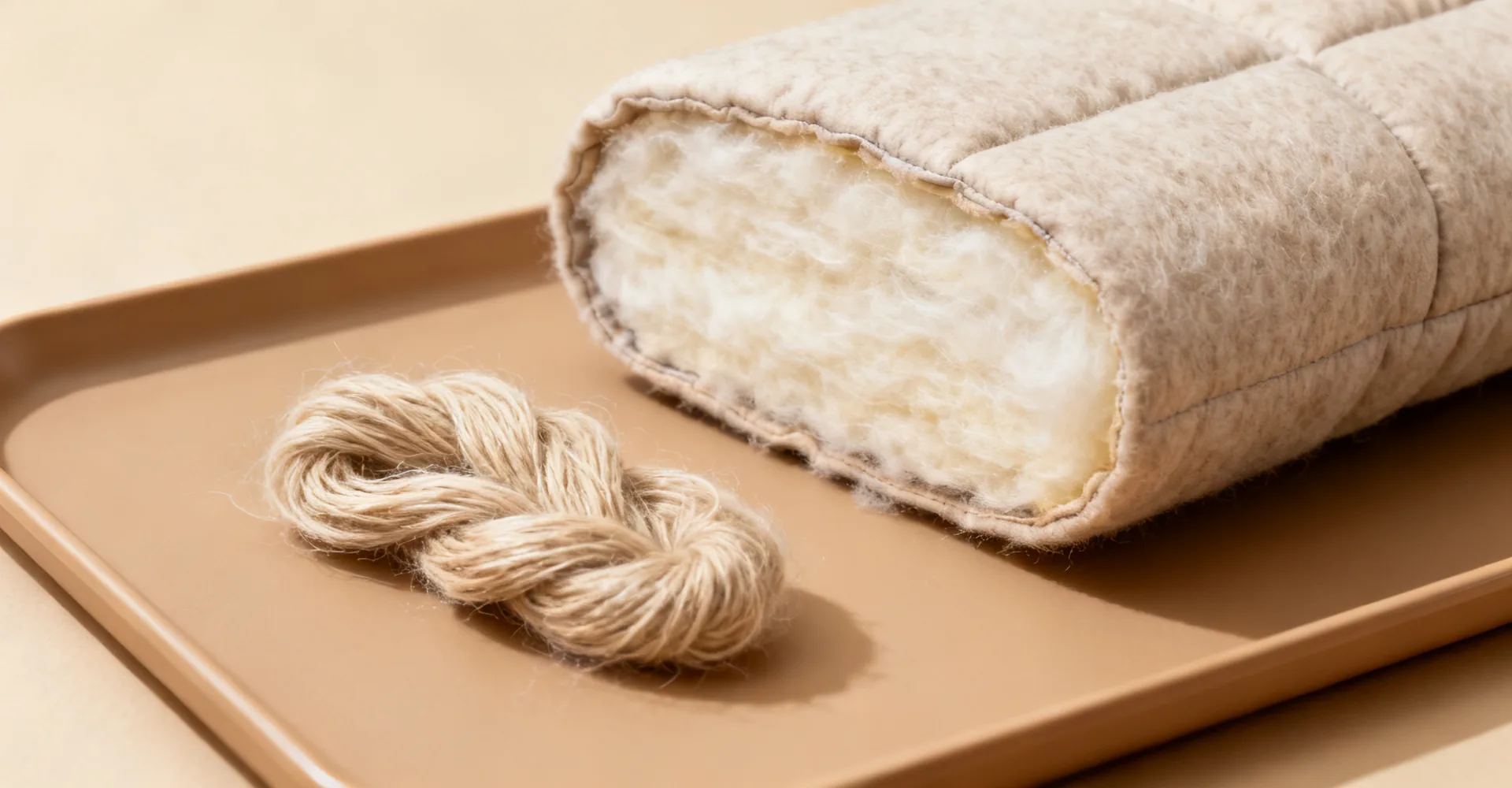
macro cross-section of unbranded insulating fiber batting beside loose filament on a neutral tray

Explore the fiber construction

THERMOLITE — Read the insulation fiber before a garment claim

Fiber
Surface of the insulating fiber, not a finished shell
Blend context
Composition and ratio belong in the declaration
Supply format
Cone, package, or cut length only when that format applies
Send a fiber specification

Material scope

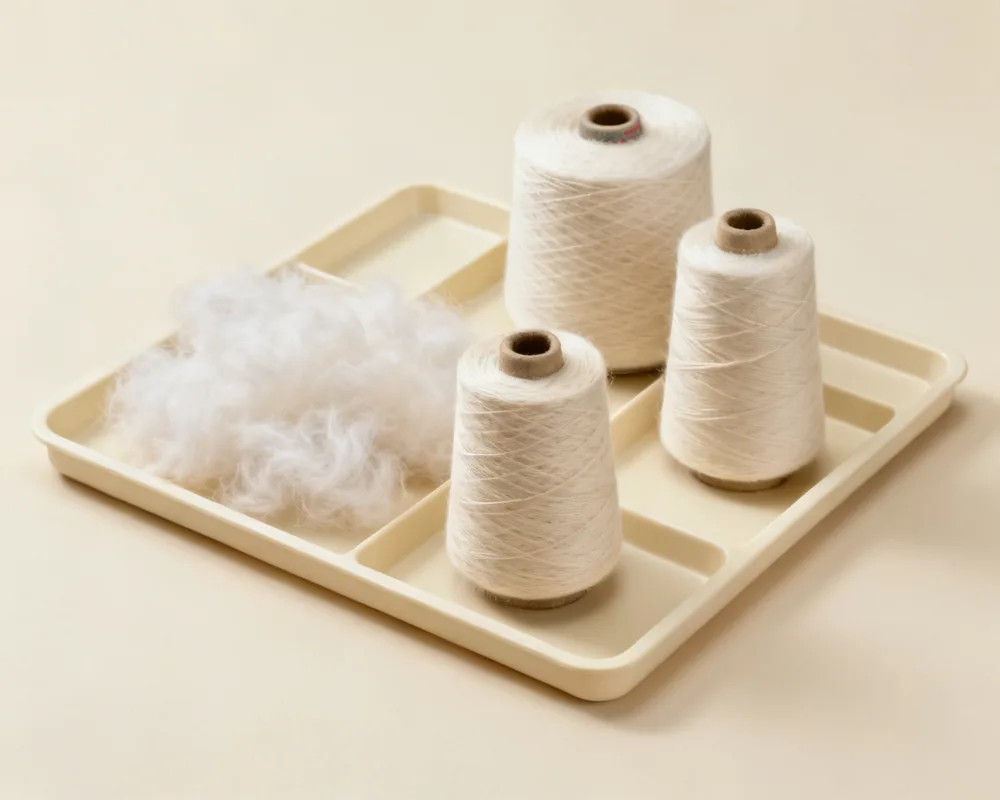
unbranded fiber tufts and yarn cones arranged for an insulation fiber review

Yarns, Fibers and Threads

Start with the fiber or yarn reference. Linear density, blend ratio, and supply format are the first fields to name. A trade name does not replace those fields, and a garment temperature question is a separate conversation.

View fiber scope
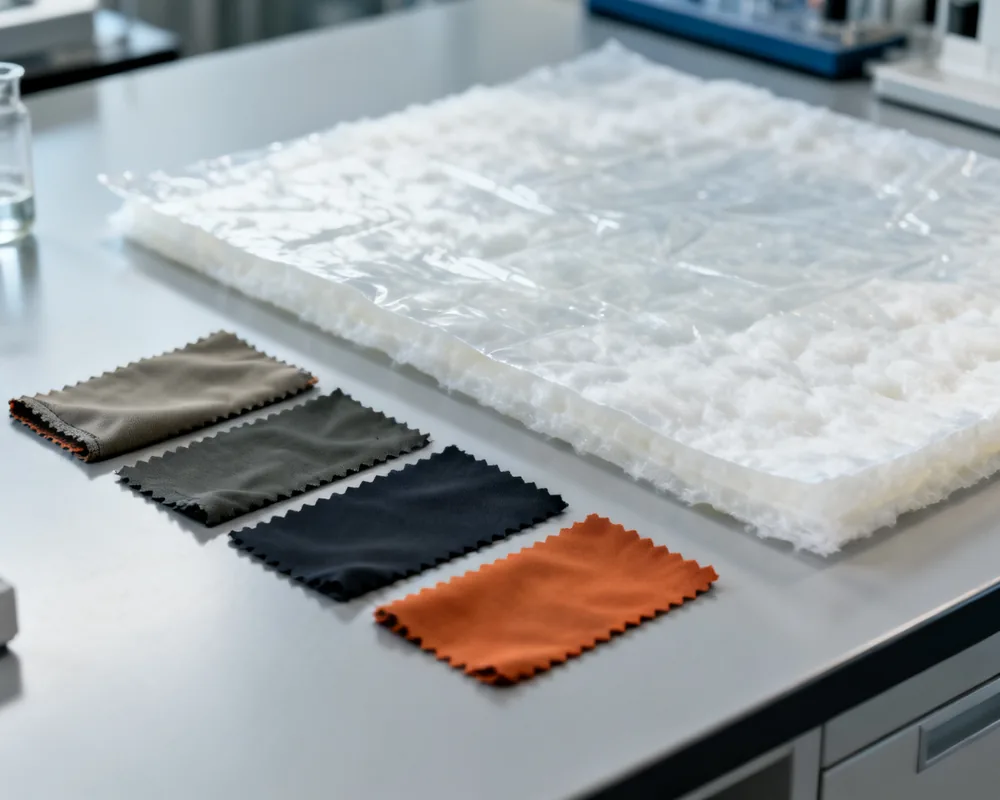
unbranded outdoor fabric swatches and a thin insulation batting sheet on a test bench

Outdoor and Performance Fabrics

When the enquiry moves from loose fiber to a fabric or batting construction, add GSM, usable width, and finish. Keep water resistance and moisture movement as different questions, each tied to a method and a specimen state. A shell question is a hydrostatic head question. An insulation-layer question is a water vapor transmission question. Air permeability is a third measurement and does not stand in for either of the other two.

Match the use context

Specification essentials

These rows are questions for an insulation brief. They are not published performance values for THERMOLITE fiber or for any finished garment. Wool and other natural fibers usually enter the brief when handle and moisture take-up lead. A synthetic insulating fiber usually enters when drying and loft after compression lead. Those are opposing reasons to choose a fiber. They are not an environmental ranking, and this page does not score either side.

Read the units before a figure is copied. One denier equals 1 gram per 9,000 metres of fiber. One dtex equals 1 gram per 10,000 metres. A composition line is percent by mass, and the named parts should add to 100%. GSM means grams per square metre and belongs to a batting or a fabric. A phrase such as 100 gram insulation stays a layer-mass target of 100 g/m². It is not a temperature on this page. Denier and dtex stay separate from a yarn-count system.

Fields to agree; no product performance is implied
Field Target question Evidence question
Composition Which fiber or blend is named, and in what ratio? Which declaration or specimen record supports that wording?
GSM If the item is a batting or fabric, what mass per area is the target? Which specimen and method sit beside that figure?
Usable width For a fabric or batting sheet, what cuttable width is needed? Is the figure cloth width or the width inside the selvedge?
Finish Is a treatment, bonding step, or face fabric part of the construction? Was the sample reviewed before or after that step?
Linear density For the fiber or yarn itself, which denier or dtex unit is in use? Is that unit kept separate from yarn count?

Sampling approval gates

A sample enquiry records the comparison you want. It does not promise that a sample is in stock or that bulk fiber will match a swatch.

Information handoff, not a delivery guarantee
Gate Buyer reference Discussion output
Brief Fiber name, blend, and the insulation use A written sample question
Shade Fiber color or a fabric shade reference, if color matters A physical review note, not a screen color
Bulk context Quantity, supply format, and destination An order-specific confirmation still to be made

Define the development question

Say whether the change is fiber form, blend ratio, batting mass, or the fabric that carries the fiber.

What should the next specimen show, and which record will you compare it with?
Send a fiber specification